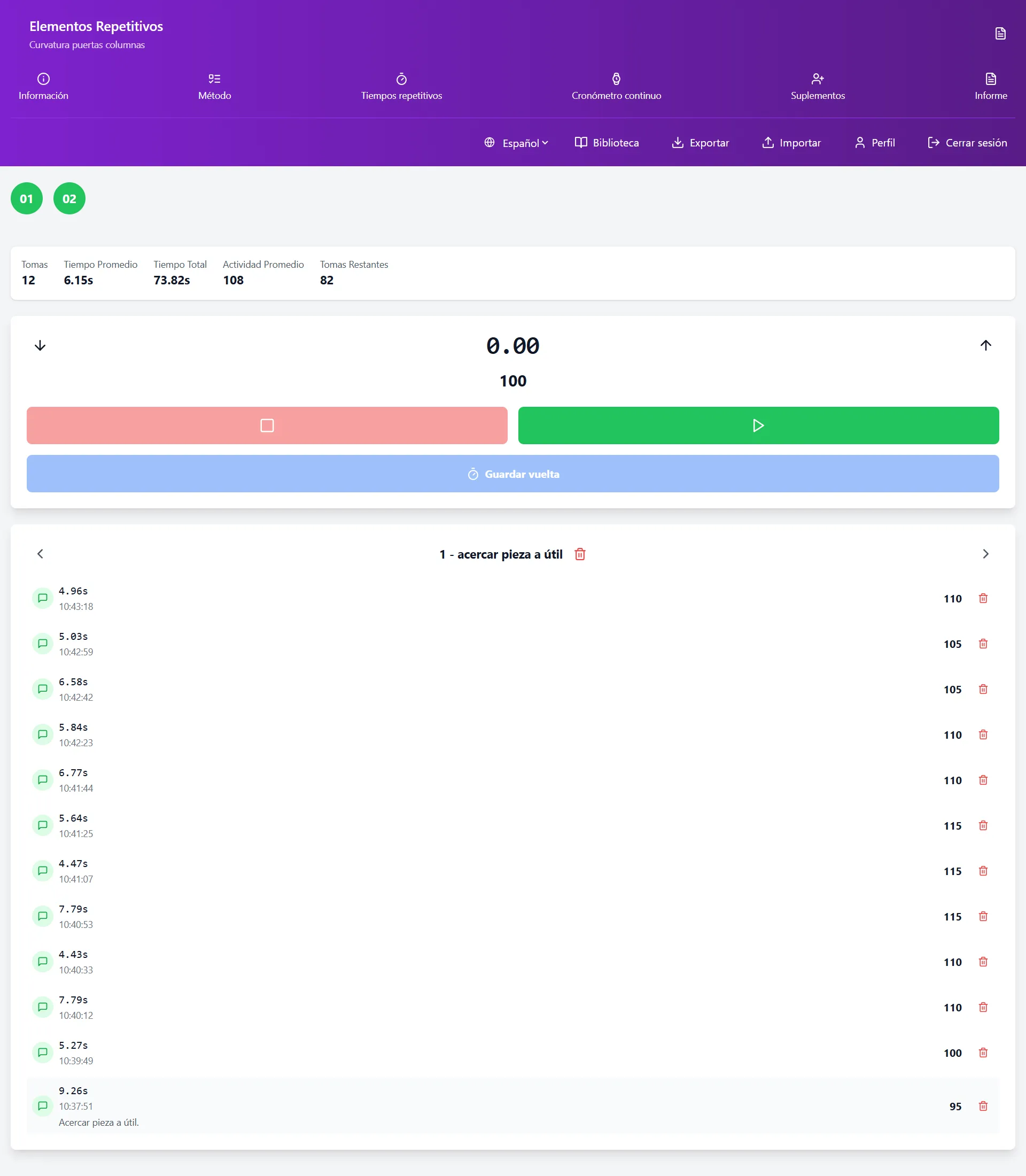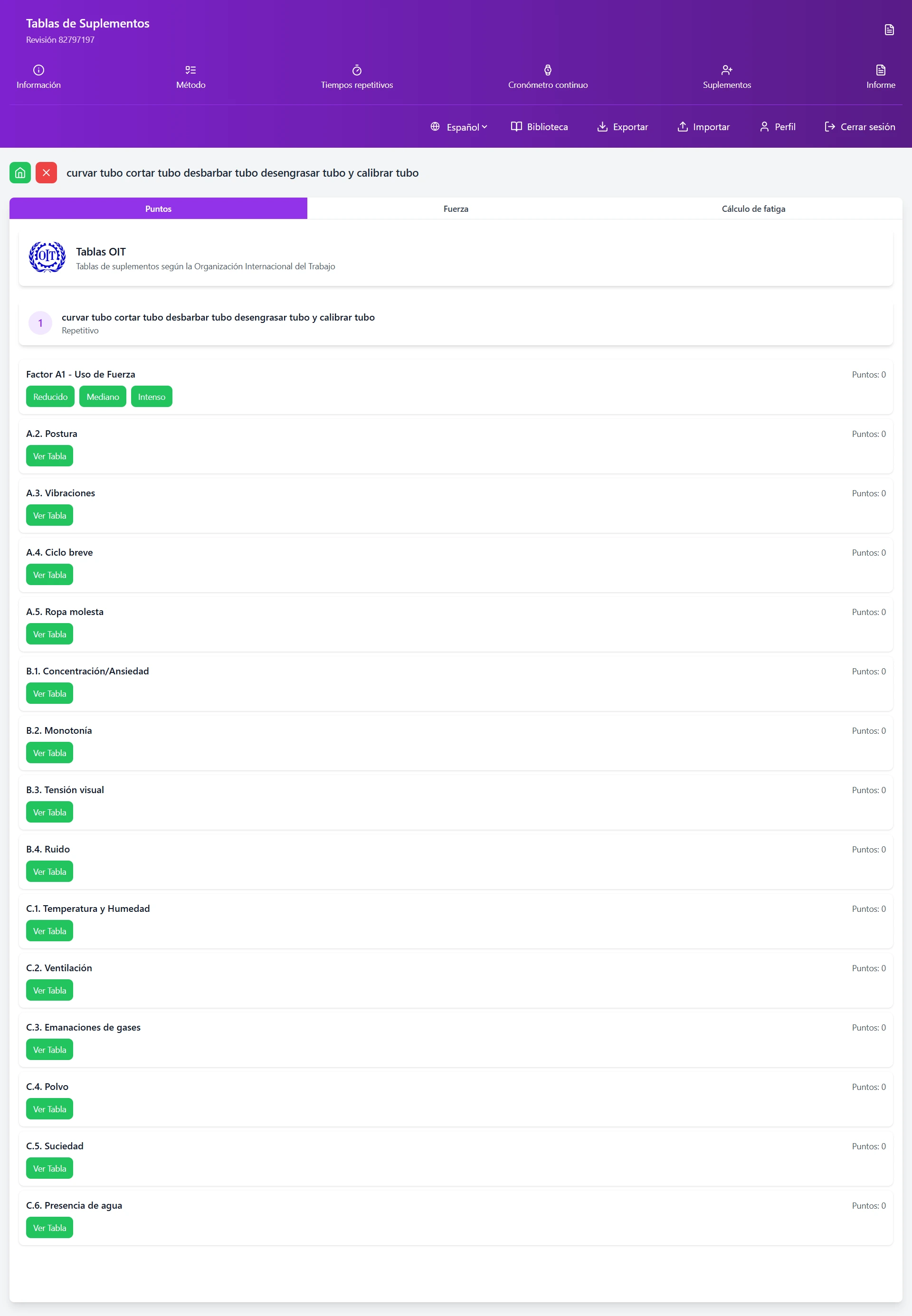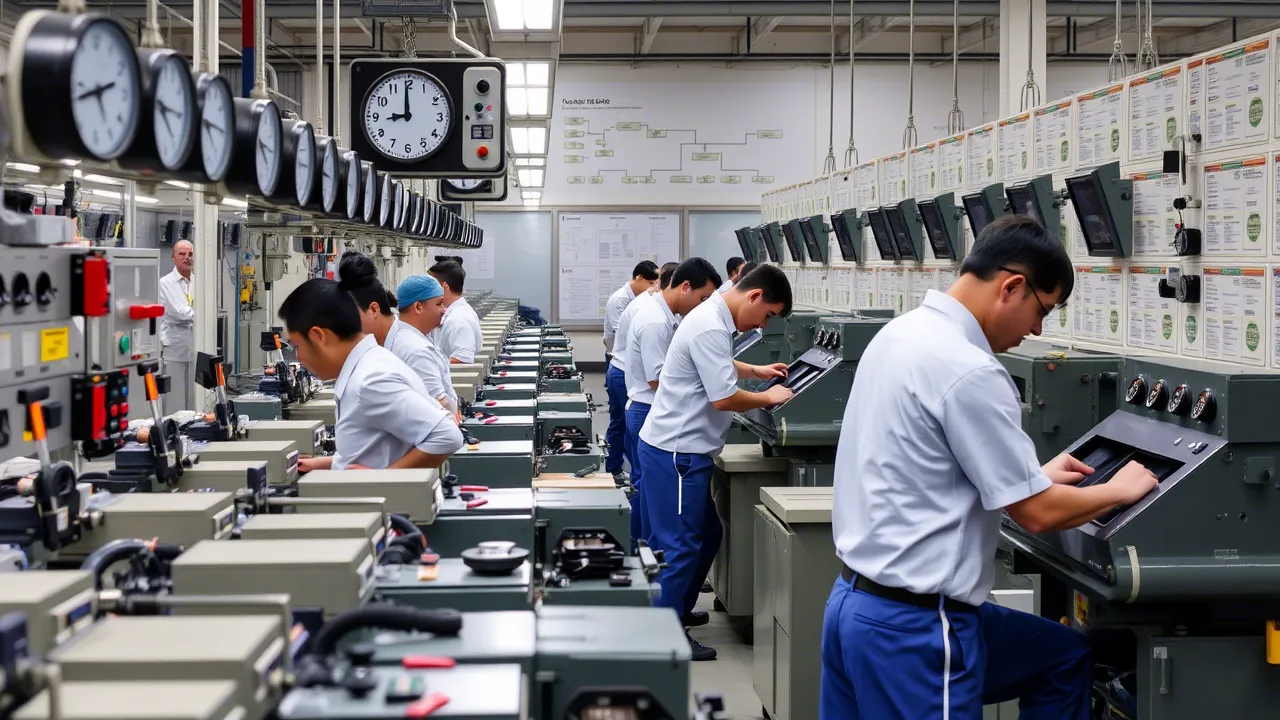
In this lesson we review the basic time study procedure: how to correctly divide a time study into different work elements, which elements are the most typical, where to place the break points, and how to record the times and operations that form the subsequent basis for calculating standard time.
Time study or timing is a measurement technique used to record the operation times of a work cycle, while appreciating the work pace at which the operator performs the activity.
The objective is to analyze the data to determine the standard time required to execute the task according to a pre-established execution standard: the method must be previously standardized.
What is a Work Cycle Element?
An element is a delimited part of a complete task that is selected to facilitate its observation, measurement, and analysis in a larger work cycle, which is a succession of several elements to perform this task.
Why is it Convenient to Divide Work into Elements?
For many reasons:
To separate, for example, productive time from unproductive time and evaluate it differently.
To assess the work pace with greater accuracy than if the whole cycle were observed: element by element, we can judge whether there are changes in pace or not.
To recognize the different types of elements, which we will now classify, isolate those that cause special fatigue in the operator, and be able to supplement them appropriately.
To standardize and verify the method more easily and extract its times, especially those of the cyclical elements, and also to be able to catalog the acyclical or frequency elements.
Different Types of Elements in an Industrial Time Study
Thus, we can, roughly, differentiate between elements:
Repetitive or cyclical, which appear in all work cycles.
Casual, acyclical, or frequency. For example: cleaning the chips that accumulate every n cycles, restocking the material from the box when it runs out, etc.
Likewise, elements can be more constant or more variable. This is another reason to divide the work cycle into elements.
Where to Define the Work Elements of a Cycle
The different elements should be easily identifiable, with clearly defined beginning and end, so that they can be recognized both by oneself and by another analyst who might perform another batch of timing at some other point.
They should be as brief as possible, but not excessively so. That is, a minimum of about five or six seconds, since we must not forget that in addition to timing, the work pace will be appreciated at the same time. To facilitate this control, it is advisable, if possible, to place short elements next to longer ones, as it helps the analyst sustain concentration throughout the study.
It is advisable to separate manual elements from mechanical ones, and constant elements from variable ones.
It is also advisable to take advantage of the sounds of the process to make the separation of elements easier, for example when a click is heard.
It is always preferable to place the break point on touching something that is unequivocal, rather than on leaving something, which is somewhat more equivocal.
Finally, it is essential to observe several cycles before timing to adequately define the work elements and make sure that they will occur in the order we have defined.
Possible Decompositions of the Cycle into Elements
In the case of a short cycle like this one, in which the elements into which we could decompose it will show no significant differences in the allowances applied to each of them, it would be correct to divide it into more elements or not. On the other hand, if the work to be measured involves some elements with manual handling of loads and others without, we should separate them and treat them differently.
Exercise
You can practice defining elements with this video of a work process.
Conclusion
Mastering industrial time study techniques is essential for any professional seeking to optimize production processes. The systematic application of these methods not only improves operational efficiency but also significantly contributes to cost reduction and increased business competitiveness. Remember that precision in measurement and rigorous data analysis are the basis for establishing reliable time standards that drive continuous improvement in your organization.
Don't want to do it yourself? We do it for you from €800
If you prefer to outsource it, Cronometras delivers a complete time and motion study from a single video: elemental breakdown, OIT/TAL fatigue allowances, standard time with tolerances, and a report in PDF + Excel + JSON ready to present to management.