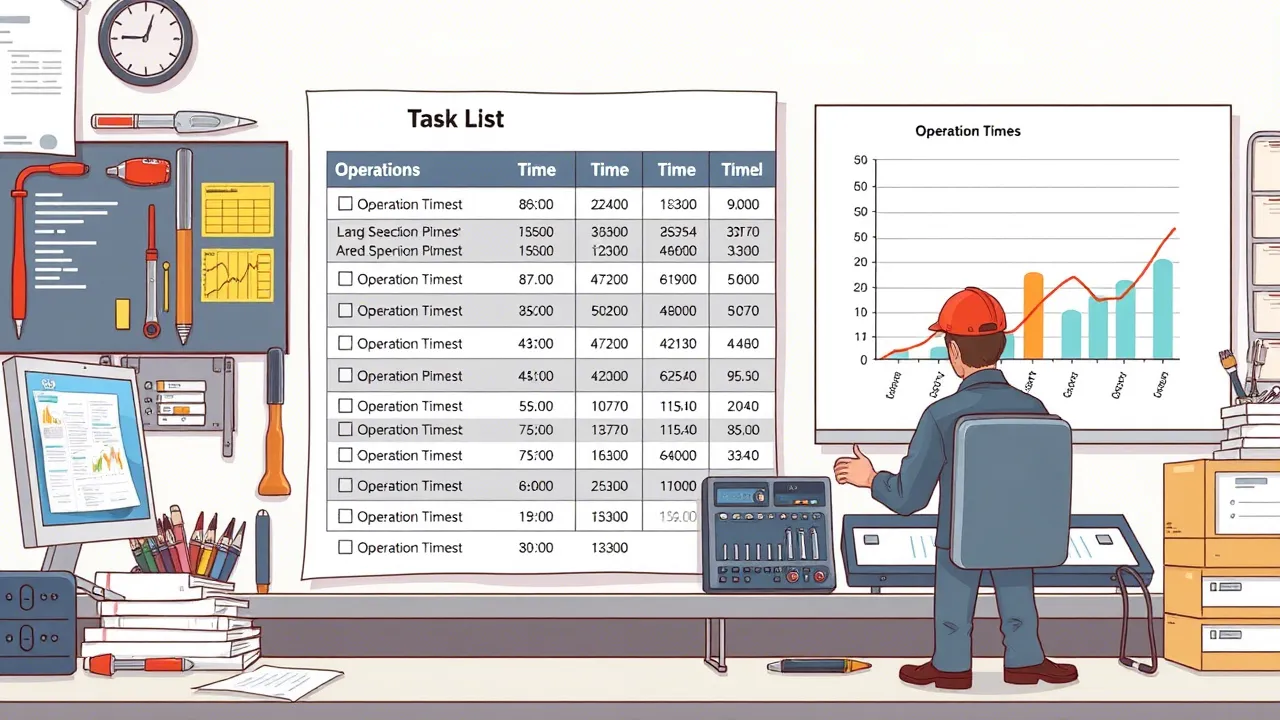
Imagine an operator on an assembly line. They repeat the same movement hundreds of times a day, feeling tension building up in their muscles and joints. Pain becomes a constant distraction, affecting their concentration and speed. This situation, unfortunately common in industry, is an example of how the lack of ergonomics can negatively affect productivity.
Ergonomics, the study of the interaction between humans and their work environment, offers solutions to prevent injuries, improve worker wellbeing and, as a consequence, increase business efficiency. According to the Occupational Safety and Health Administration (OSHA), musculoskeletal disorders (MSDs) represent 33% of all workplace injuries and illnesses in the United States, with an estimated annual cost of 20 billion dollars for businesses.
Ergonomics, also known as the study of human factors, has become a crucial discipline in the workplace. It focuses on understanding the interaction between humans and the elements of a system, seeking to optimize people's wellbeing and the overall efficiency of the system. In this article, we will explore the principles and objectives of ergonomics, its systemic approach, the different areas of study, the ergonomic analysis of the workplace, and the working conditions that this discipline seeks to improve.
Objectives and Systemic Approach
The main objective of ergonomics is to adapt work to the capabilities and possibilities of the human being. It's not just about avoiding injuries and illnesses, but also about creating a work environment that promotes health, safety, comfort, satisfaction, and productivity.
To achieve this objective, ergonomics adopts a systemic approach, considering physical, cognitive, social, organizational, and environmental factors in their interaction. Each of these factors plays a role in the worker's experience, and their joint analysis allows identifying areas for improvement and designing comprehensive solutions.
Areas of Ergonomics
Ergonomics is divided into different areas of study, each focused on a specific aspect of the human-machine interaction:
Physical Ergonomics: Studies the relationship between physical activity and human anatomy, anthropometry, physiology, and biomechanics. It focuses on aspects such as postures, material handling, repetitive movements, and workplace design, with the aim of preventing musculoskeletal disorders and promoting occupational safety and health.
Cognitive Ergonomics: Analyzes how mental processes, such as perception, memory, reasoning, and motor response, are affected by the interaction between people and systems. It focuses on aspects such as mental workload, decision making, human-computer interaction, human reliability, and work stress, seeking to optimize system design for the user.
Environmental Ergonomics: Examines the conditions of the physical work environment, such as lighting, noise, temperature, humidity, and air quality, with the aim of creating a comfortable and healthy environment for workers.
Organizational Ergonomics: Focuses on the optimization of sociotechnical systems, including organizational structures, processes, policies, communication, human resource management, and task design, in order to improve efficiency, satisfaction, and wellbeing at work.
Ergonomic Analysis of the Workplace
The ergonomic analysis of the workplace is a fundamental tool to identify and evaluate ergonomic risks and propose solutions that improve working conditions. This analysis involves a systematic description of the task, using observations, interviews, and measurement instruments to obtain information about:
Workplace: Dimensions, arrangement of elements, workspace, tools, and equipment.
General physical activity: Movements, postures, forces, and repetitiveness.
Lifting loads: Weight, frequency, distance, and height of lifting.
Work posture and movements: Body position, joint angles, reaches, and displacements.
Risk of accident: Presence of dangerous elements, risks of falls, blows, and entrapments.
Work content: Task complexity, autonomy, decision making, and mental load.
Communication and personal contacts: Interaction with colleagues, superiors, and clients.
Work repetitiveness: Frequency of repetitive movements and breaks.
Attention: Required level of concentration and duration of sustained attention.
Lighting, thermal environment, noise, and vibrations: Environmental conditions that can affect the health and comfort of the worker.
Workspace Design
Ergonomics offers criteria for the spatial design of workstations, both standing and seated, that promote comfort and efficiency:
Optimal reach zones: Define maximum grip distances to avoid forced movements and postures.
Work plane height: Adapt it to the characteristics of the worker and the task to be performed, using the "elbow rule" as a reference.
Standing workstations: Suitable for handling heavy loads, frequent movements, or limited spaces. They should allow alternating posture and adjusting height.
Seated workstations: Recommended for precision tasks, close visual control, or spaces with low ceilings. The chair should be ergonomic and allow changes in posture.
Leg space: Ensure sufficient space for legs in both standing and seated workstations.
Information devices: Place them in the optimal vision zone (up to 30° below horizontal).
Working Conditions
Ergonomics seeks to improve various aspects of working conditions that can affect the health and wellbeing of workers:
Lighting: Adapt the intensity and type of lighting to the task and avoid reflections and glare.
Thermal environment: Maintain a comfortable temperature and control humidity and ventilation.
Noise: Reduce the noise level and the time of exposure to high noise.
Vibrations: Minimize vibrations in tools and equipment.
Work stress: Identify and control stress factors, such as work overload, lack of control, and role ambiguity.
Teamwork: Foster cooperation and communication among team members.
Participatory design: Involve workers in the design of their workstations and tasks.
Measure to Improve
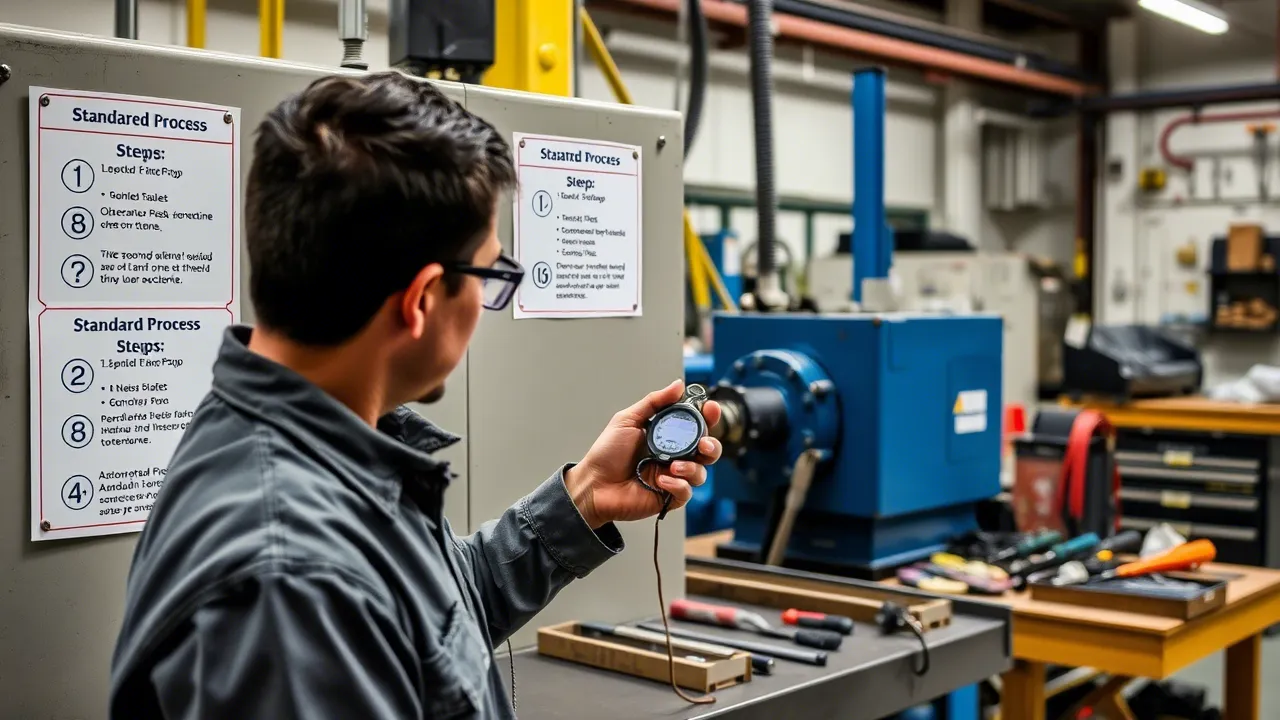
To optimize ergonomics in industry, it is essential to measure process times and analyze worker movements. There are tools like the industrial time study app cronometras.com that allow recording and analyzing cycle times, identifying bottlenecks, and evaluating process efficiency. The information obtained through these measurements is key to detecting tasks with high ergonomic risk and designing solutions that improve posture, reduce fatigue, and optimize movements.
Examples of Ergonomic Solutions
Design of adjustable workstations: Allow workers to adjust the height of the chair, desk, and other elements of the workstation to their individual needs.
Implementation of ergonomic tools: Use tools that adapt to the user's anatomy and reduce the force needed to perform the task.
Task rotation: Avoid repetitiveness of movements and muscle fatigue by alternating tasks that involve different muscle groups.
Active breaks: Implement regular breaks for workers to perform stretches and exercises that relieve muscle tension.
Tangible Benefits of Ergonomics
Cost reduction: The implementation of ergonomic measures can significantly decrease costs associated with MSDs, work absenteeism, staff turnover, and insurance premiums.
Increased productivity: An ergonomic work environment improves worker comfort and satisfaction, which translates into greater concentration, less fatigue, and greater efficiency.
Quality improvement: Ergonomics can contribute to improving the quality of the final product by reducing errors caused by fatigue, discomfort, or distractions.
Recapitulating
Ergonomics plays a crucial role in creating safe, healthy, and productive work environments.
By understanding the interaction between humans and systems, ergonomics allows identifying risks, improving workplace design, optimizing working conditions, and, ultimately, promoting worker wellbeing and satisfaction. The application of ergonomic principles is essential for the success of any organization seeking to improve the efficiency and quality of life of its employees.
It is worth concluding that ergonomics, therefore, is not just a matter of wellbeing, but an intelligent strategy to increase the efficiency and profitability of businesses. Are you ready to boost your company's efficiency through ergonomics?
Prevention and Management of Work-Related Musculoskeletal Disorders
Impact of MSDs on Businesses
Musculoskeletal disorders (MSDs) have a significant impact on businesses, affecting various aspects of work functioning:
Absenteeism: In 2015, more than 53% of workers with MSDs reported work absences, compared to 32% of workers without health problems.
Presenteeism: 29% of workers with MSDs worked while sick, compared to 9% of workers without health problems.
Early retirement: One-third of workers with MSDs believe they will not be able to continue in their current job until age 60.
Legislation on Work-Related MSDs
The European Union has established key directives to address MSDs:
Directive 89/391/EEC (OSH Framework Directive)
Directive 90/269/EEC (Manual Handling of Loads Directive)
Directive 2002/44/EC (Vibration Directive)
Directive 90/270/EEC (Display Screen Equipment Directive)
Directive 2009/104/EC (Use of Work Equipment)
Directive 2006/42/EC (Machinery Directive)
Addressing Work-Related MSDs
To prevent and control MSDs, an integrated management approach is recommended that includes:
Preparation:
- Decide who will lead the process
- Review available resources
- Develop a plan and allocate resources
Workplace risk assessment:
Identify MSD risk factors
Develop an action plan
Implementation and monitoring of preventive and protective measures
Regular review and update of the risk assessment
General Principles of Prevention
Avoid risks:
- Automate lifting and transport operations
- Implement ergonomic design solutions
- Plan work to avoid repetitive tasks or forced postures
Combat risks at their source:
- Reduce the height of lifting loads
- Address organizational problems
Adapt work to the individual:
- Design flexible workspaces
- Allow variation in task performance
Adapt to technological progress:
- Stay up to date with new mechanical aid devices
- Update worker training
Replace the dangerous with the safe or less dangerous:
Replace manual handling with mechanical handling
Develop a coherent prevention policy
Apply collective measures first
Provide adequate training and instruction to workers
Combined Approach
Given that MSDs have multifactorial causes, a combined approach is recommended that addresses:
The workplace (e.g., ergonomic furniture)
Work organization (e.g., task variation)
Psychosocial factors (e.g., promotion of work autonomy)
Workers (e.g., training in good postures)
This comprehensive approach will have a greater impact on the musculoskeletal health of workers than interventions that only address one risk factor.
Relationship between Ergonomics and Productivity
The relationship between ergonomics and productivity has been the subject of numerous studies that demonstrate how the implementation of ergonomic improvements can have a significant impact on work performance. Below are some relevant data and statistics:
Impact on Productivity
According to the ergonomic intervention literature, well-designed improvements can translate into double-digit productivity gains, on the order of 10% to 25% (illustrative example: the range varies widely by sector and task).
A cost-benefit analysis of ergonomic interventions in U.S. companies (Goggins, Spielholz, and Nothstein, Journal of Safety Research, 2008) concluded that the economic benefits of the studied interventions clearly exceeded their cost.
Reduction of Injuries and Absenteeism
The U.S. Bureau of Labor Statistics (BLS) reported that musculoskeletal disorders accounted for close to one third of all cases of non-fatal injuries and illnesses that required days away from work in 2019.
A systematic literature review led by Tompa and colleagues (Journal of Occupational Rehabilitation, 2010) found strong evidence that workplace ergonomic interventions are economically worthwhile, especially in manufacturing and logistics.
The International Labour Organization (ILO) estimates that the economic costs of work-related accidents and illnesses represent approximately 4% of global GDP each year (estimate also reported in Takala et al., 2014).
Work Time Studies and Ergonomics
Work time studies, a fundamental technique in industrial engineering, also play a crucial role in ergonomics and productivity improvement:
Methodology and Applications
The time and motion study method, developed by Frederick Taylor and perfected by Frank and Lillian Gilbreth, remains a valuable tool for analyzing work efficiency and identifying opportunities for ergonomic improvement (Kanawaty, 1992).
The application of ergonomic principles in manual electronic component insertion lines has translated into productivity and quality improvements and a reduction in defect-related costs (Yeow and Sen, International Journal of Industrial Ergonomics, 2006).
Technology and Data Analysis
The implementation of time study (cronoanalysis) software, such as Cronometras, allows for a more precise and detailed analysis of work times.
The combination of time studies with ergonomic analyses and technologies such as motion capture and wearable sensors helps identify inefficient and potentially harmful movement patterns that go unnoticed by the naked eye.
Impact on Productivity and Health
- The design of assembly systems that addresses productivity and ergonomics jointly — rather than as independent objectives — is the subject of dedicated methodological frameworks in the sector literature (Battini, Faccio, Persona, and Sgarbossa, International Journal of Industrial Ergonomics, 2011).
In conclusion, scientific evidence and statistical data strongly support the importance of integrating ergonomics and work time studies in the management of productivity and occupational health. Companies that adopt this holistic approach not only improve their operational efficiency but also create safer and healthier work environments, which translates into tangible benefits for both employees and the organization as a whole.
Don't want to do it yourself? We do it for you from €800
If you prefer to outsource it, Cronometras delivers a complete time and motion study from a single video: elemental breakdown, OIT/TAL fatigue allowances, standard time with tolerances, and a report in PDF + Excel + JSON ready to present to management.